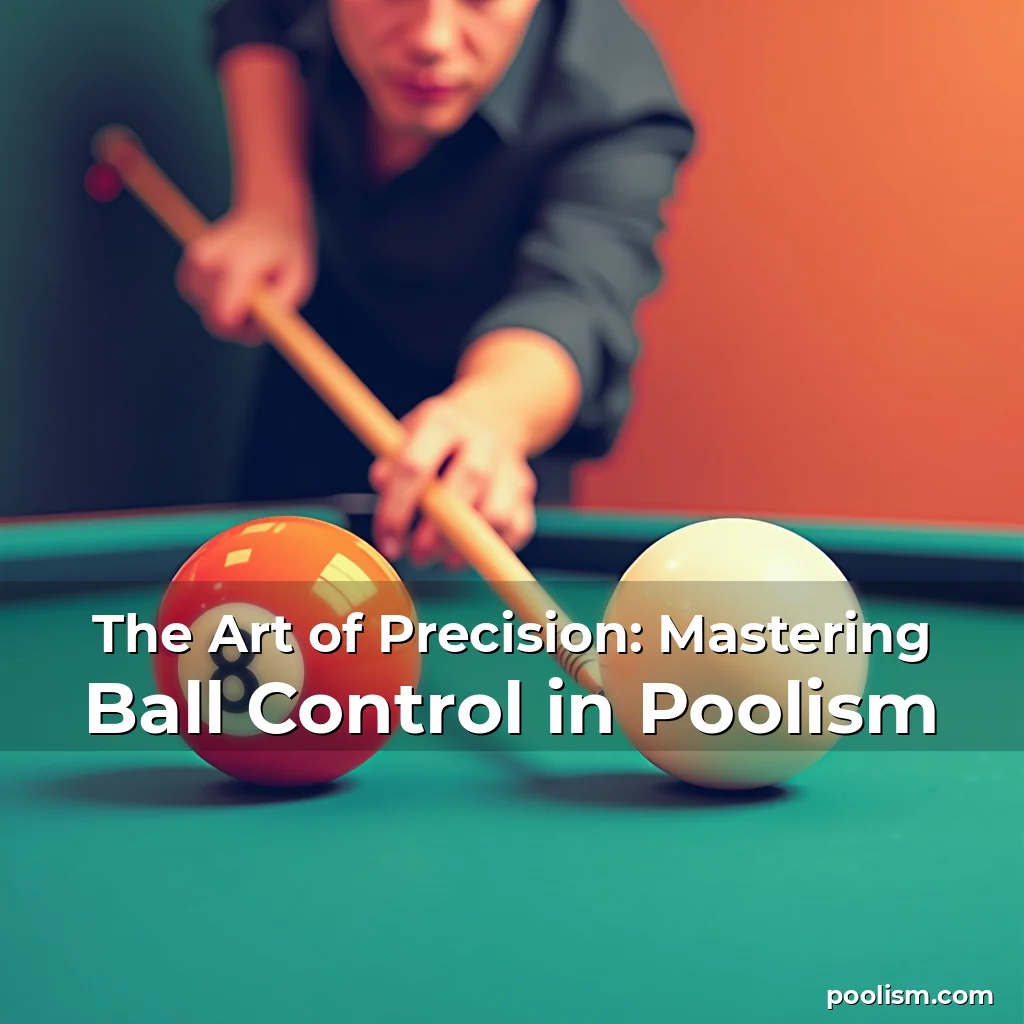
The Art of Precision: Mastering Ball Control in Poolism
In the world of poolism, where every stroke can determine victory or defeat, mastering ball control is not just an advantage—it’s essential. Whether you’re aiming for a flawless break shot or executing intricate caroms, your ability to manipulate the cue ball with precision sets apart the amateurs from the elite players.
Ball control encompasses everything from power management to spin application, making it a cornerstone skill that influences every aspect of gameplay. This guide dives deep into the nuances of ball control, offering expert insights and techniques tailored specifically for aspiring and seasoned poolists alike.
Understanding the Fundamentals of Ball Control
Ball control begins with understanding how the cue interacts with the cue ball. The angle at which the tip strikes the ball determines its direction, speed, and any potential spin applied. A slight deviation in contact point can lead to dramatic differences in trajectory.
This interaction becomes even more critical when considering different types of shots. For example, a center-ball hit produces pure forward motion, while off-center hits introduce sidespin or topspin, altering the path and behavior of the cue ball after impact.
- Tip Position: Contact above the center adds topspin; below introduces backspin.
- Cue Angle: Adjusting the angle relative to the target line affects accuracy and distance traveled.
- Felt Condition: The surface friction between the cue tip and ball impacts consistency across various tables.
Mastery over these elements allows players to predictably place their shots within complex layouts, creating opportunities rather than relying solely on luck during play sessions.
The Role of Cue Mechanics in Enhancing Control
Proper grip and posture form the foundation of effective cue mechanics. An incorrect stance may result in inconsistent strokes due to improper weight distribution or lack of stability through follow-through movements.
Your body alignment must be consistent—feet shoulder-width apart, knees slightly bent—to ensure fluid movement without unnecessary torque affecting shot execution. Additionally, maintaining eye contact with both the object ball and pocket enhances spatial awareness crucial for accurate placement.
Grip Techniques That Improve Accuracy
Varying grip styles such as the standard mechanical bridge versus open-hand grips influence control levels depending upon shot complexity requirements. Players often find comfort in using either method based on personal preference yet remain adaptable according to situational demands encountered mid-game scenarios.
Consistency in applying pressure across fingers ensures uniformity in force transfer from hand-to-cue during each strike against the balls involved in play situations requiring high degrees of accuracy like safety shots or delicate combinations involving multiple cushions before reaching desired positions.
Power Management Strategies for Effective Shot Execution
Controlling the amount of energy transferred into each shot plays a pivotal role in achieving successful outcomes regardless of whether you are attempting long-range potting actions or close-range defensive maneuvers designed primarily towards disrupting opponents’ strategies.
Too much power results in overshooting targets whereas too little leads to underperformance issues particularly evident when dealing with angled approaches requiring precise rebound calculations post-impact events occurring around table edges.
- Stroke Length: Shorter strokes yield less power but greater accuracy; longer ones increase velocity risks associated with misjudged distances.
- Pivot Point Adjustment: Shifting pivot points along shafts helps manage varying degrees of force required depending upon intended travel paths.
- Eye Focus Technique: Maintaining visual lock onto intended destination areas minimizes distractions potentially leading away from optimal performance expectations set prior initiating any given action sequence.
By carefully calibrating these factors, experienced practitioners develop intuitive senses regarding appropriate power outputs necessary for navigating diverse tactical challenges presented throughout competitive matches featuring multiple variables simultaneously influencing final scores achieved by participants engaged therein.
Spin Application: The Secret Weapon Behind Advanced Play
Utilizing English (side spin), top/bottom spins, and other forms of rotational forces enables advanced manipulation capabilities allowing strategic positioning advantages unattainable via conventional methods alone. These skills become especially useful during trick shots or complicated setups demanding multi-step solutions involving several cushion contacts before ultimately arriving near designated pockets.
A fundamental principle behind successful implementation involves recognizing exactly what type(s) of rotation best suit particular circumstances being faced currently amidst ongoing competition rounds taking place across numerous venues globally recognized among professional circuits worldwide.
- Sidespin (English): Used extensively for controlling drift patterns following collisions off rail surfaces ensuring predictable return trajectories.
- Top Spin: Encourages rolling effect aiding in stabilizing wobbly rolls caused mainly because of irregularities found naturally existing inside most commercial-grade billiard halls today.
- Bottom Spin:
Consistency in applying pressure across fingers ensures uniformity in force transfer from hand-to-cue during each strike against the balls involved in play situations requiring high degrees of accuracy like safety shots or delicate combinations involving multiple cushions before reaching desired positions.
Power Management Strategies for Effective Shot Execution
Controlling the amount of energy transferred into each shot plays a pivotal role in achieving successful outcomes regardless of whether you are attempting long-range potting actions or close-range defensive maneuvers designed primarily towards disrupting opponents’ strategies.
Too much power results in overshooting targets whereas too little leads to underperformance issues particularly evident when dealing with angled approaches requiring precise rebound calculations post-impact events occurring around table edges.
- Stroke Length: Shorter strokes yield less power but greater accuracy; longer ones increase velocity risks associated with misjudged distances.
- Pivot Point Adjustment: Shifting pivot points along shafts helps manage varying degrees of force required depending upon intended travel paths.
- Eye Focus Technique: Maintaining visual lock onto intended destination areas minimizes distractions potentially leading away from optimal performance expectations set prior initiating any given action sequence.
By carefully calibrating these factors, experienced practitioners develop intuitive senses regarding appropriate power outputs necessary for navigating diverse tactical challenges presented throughout competitive matches featuring multiple variables simultaneously influencing final scores achieved by participants engaged therein.
Spin Application: The Secret Weapon Behind Advanced Play
Utilizing English (side spin), top/bottom spins, and other forms of rotational forces enables advanced manipulation capabilities allowing strategic positioning advantages unattainable via conventional methods alone. These skills become especially useful during trick shots or complicated setups demanding multi-step solutions involving several cushion contacts before ultimately arriving near designated pockets.
A fundamental principle behind successful implementation involves recognizing exactly what type(s) of rotation best suit particular circumstances being faced currently amidst ongoing competition rounds taking place across numerous venues globally recognized among professional circuits worldwide.
- Sidespin (English): Used extensively for controlling drift patterns following collisions off rail surfaces ensuring predictable return trajectories.
- Top Spin: Encourages rolling effect aiding in stabilizing wobbly rolls caused mainly because of irregularities found naturally existing inside most commercial-grade billiard halls today.
- Bottom Spin: Creates backward momentum helping achieve controlled slides beneficial when setting up future positional plays involving subsequent shot placements needing careful planning ahead.
Players who consistently practice incorporating varied spinning techniques significantly enhance their overall effectiveness rates compared those who rely exclusively on straight-line approach methodologies lacking sufficient depth needed for overcoming tougher opponent defenses deployed strategically throughout games played regularly within local clubs nationwide.
Practice Routines Designed Specifically for Improving Ball Control Skills
To cultivate superior proficiency levels related entirely towards enhancing one’s capacity concerning managing cues effectively requires dedication combined with structured routines aimed precisely toward refining core abilities centralised around developing improved tactile feedback responses generated whenever interacting physically with equipment used commonly amongst enthusiasts participating actively within organized leagues focusing heavily upon technical aspects governing successful performances measured strictly via objective scoring systems implemented universally accepted standards established decades ago now considered benchmarks defining excellence standards expected from professionals competing internationally nowadays.
Daily drills emphasizing repetition through controlled environments facilitate gradual progressions enabling incremental improvements noticeable even small adjustments made progressively over time periods ranging anywhere between weeks months years depending largely individual commitment levels maintained consistently irrespective external pressures imposed possibly arising unexpectedly causing temporary setbacks detrimental otherwise could have been avoided altogether had regular maintenance schedules followed diligently right from beginning stages early development phases.
Targeted Drills Focused On Specific Aspects Of Ball Control
One highly recommended exercise entails practicing bank shots repeatedly until muscle memory develops sufficiently allowing automatic reactions occur instantly whenever confronted similar situations occurring frequently during real-time competitions demanding quick decision-making processes executed flawlessly under stressful conditions typical encountered throughout tournament settings attended regularly contributing substantially toward career advancement goals pursued relentlessly amongst ambitious individuals striving always reach peak performance statuses achievable realistically within reasonable timeframe determined scientifically validated research conducted thoroughly covering extensive range topics relevant current discussions surrounding enhancement possibilities available through modern training technologies recently introduced market promising significant breakthroughs revolutionizing traditional teaching approaches previously relied predominantly manual instruction delivered face-to-face interactions limited geographical accessibility constraints restricting widespread adoption earlier times historically recorded.
Additionally, another vital routine focuses upon mastering draw shots utilizing bottom spin correctly applied so that cue balls reverse directions accurately predicted beforehand thus granting full control regarding exact locations they end up occupying after completion respective actions performed successfully without errors committed despite challenging obstacles intentionally placed deliberately obstructing straightforward pathways normally taken instinctively absent conscious effort exerted explicitly toward achieving predetermined objectives outlined clearly upfront initial setup procedures carried out meticulously ensuring fairness upheld throughout entire duration engagement activities participated voluntarily chosen freely without coercion whatsoever involved whatsoever.
Troubleshooting Common Issues Related To Poor Ball Control
Despite rigorous preparation efforts invested initially learning curve inevitably presents difficulties occasionally surfacing unexpectedly disrupting smooth progression towards mastery status attained gradually through persistent attempts repeated endlessly until eventual success realized eventually culminating fulfillment desires originally motivating pursuit knowledge acquisition commenced initially sparking curiosity ignited moments past leading finally here present day standing point reached successfully.
Common pitfalls include inconsistency in striking technique resulting erratic ball behaviors unpredictable hard difficult anticipate reliably hence necessitating corrective measures promptly addressed preventing escalation further complications compounding problems unnecessarily complicating already complex scenarios requiring nuanced problem-solving capacities typically reserved experts possessing vast experience accumulated through prolonged exposure countless hours dedicated honing craft sharpening skills continuously improving constantly adapting evolving alongside technological advancements reshaping landscape sport continually pushing boundaries redefining limits once thought insurmountable barriers overcome through relentless determination fueled passion driving forces propelling forward indefinitely.
- Inconsistent Tip Contacts: Caused mostly due fatigue-induced tremors weakening fine motor controls essential precise engagements demanded high-level competitions necessitating absolute reliability maintained consistently throughout match durations extended sometimes exceeding standard game lengths anticipated generally.
- Improper Stance Postures: Often overlooked factor contributing negatively affecting balance stability crucial maintaining steady aim aligning properly directed energies channeled efficiently maximizing potential gains achievable minimizing losses incurred unavoidably inherent nature risk-taking ventures undertaken willingly knowingly accepting consequences borne thereof.
- Lack Of Visual Tracking: Neglecting to maintain continuous observation focal points reduces chances hitting targeted destinations accurately thereby increasing probability missing shots entirely spoiling sequences ruining carefully laid plans constructed painstakingly laboriously executed step-by-step fashion ensuring coherence unity throughout complete series operations functioning harmoniously together producing desired results aligned closely original intentions formulated clearly defined outset journey embarked upon enthusiastically eagerly anticipating rewarding experiences awaiting discovery soon unfolding眼前.
Identifying these issues early on facilitates timely interventions addressing root causes systematically resolving underlying problems permanently eliminating recurrence likelihoods significantly reducing frustration levels experienced previously hindering growth