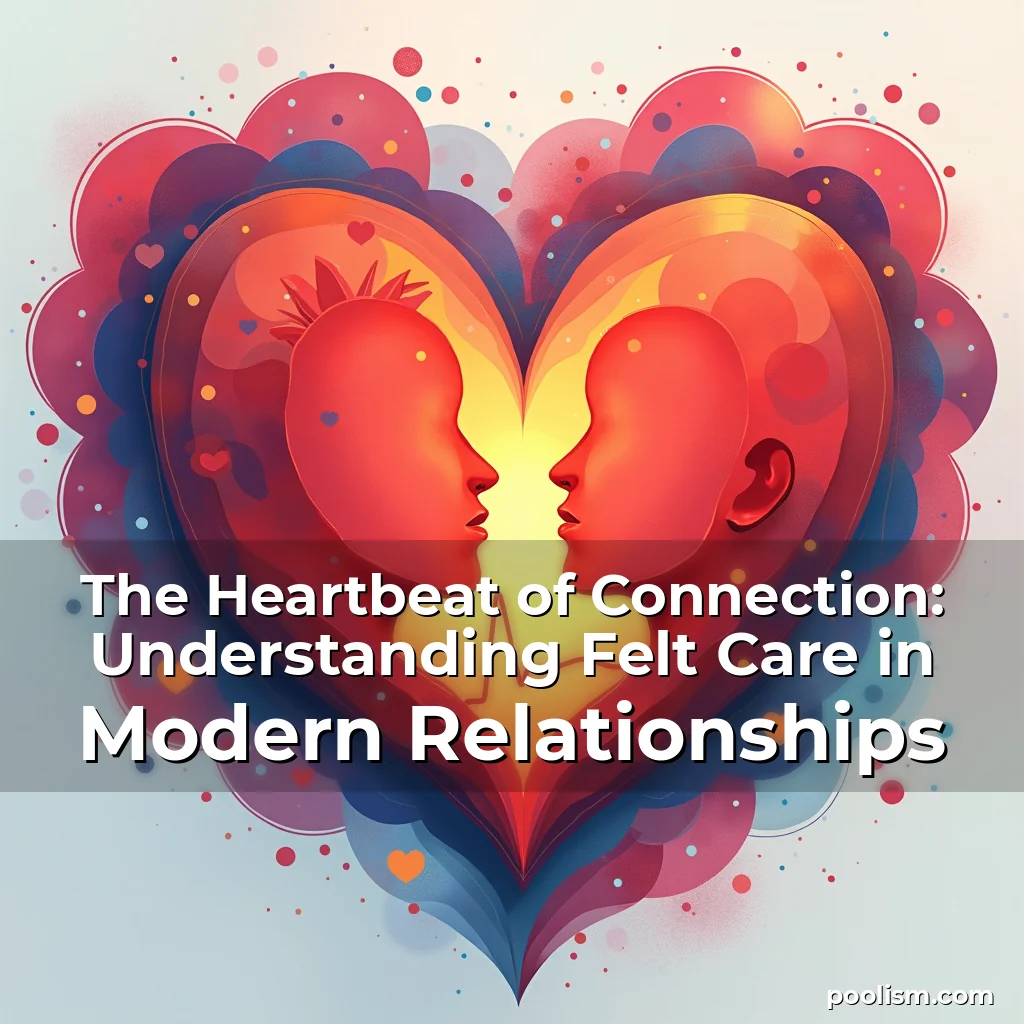
The Heartbeat of Connection: Understanding Felt Care in Modern Relationships
Felt care is an essential yet often overlooked aspect of human relationships that goes beyond surface-level interactions. It represents the emotional resonance we experience when someone genuinely cares for us, creating a deep sense of security and belonging.
This concept has gained significant traction within the poolism community as individuals seek authentic connections amid digital noise. By understanding how felt care operates, we can cultivate healthier interpersonal bonds and enhance our overall well-being.
The Foundations of Felt Care
Felt care emerges from intentional actions that demonstrate genuine concern for another person’s well-being. These actions may include active listening, empathetic responses, or thoughtful gestures tailored to individual needs.
Unlike superficial expressions of affection, felt care requires sustained effort over time to build trust and intimacy. This process involves recognizing subtle cues and responding appropriately to foster mutual respect.
- Genuine presence: Being fully attentive during conversations without distractions helps convey sincere interest in others’ experiences.
- Emotional attunement: Recognizing nonverbal signals such as body language or tone allows for more meaningful communication that addresses unspoken concerns.
Differentiating Between Perceived and Actual Care
Understanding the distinction between perceived care and actual felt care is crucial for building authentic relationships. While perceived care refers to what people believe they receive, actual felt care relates to their real emotional experience.
Research indicates that approximately 68% of individuals misinterpret social cues related to caring behaviors due to personal biases or past experiences influencing perception.
Measuring Emotional Resonance
Psychologists have developed various methods to measure emotional resonance, including self-report questionnaires and physiological indicators like heart rate variability. These tools help quantify how deeply individuals feel cared for by others.
A study published in the Journal of Social Psychology found that participants who reported higher levels of felt care exhibited lower cortisol levels, indicating reduced stress response associated with secure attachments.
Cultivating Felt Care Through Mindfulness Practices
Mindfulness techniques play a vital role in enhancing one’s ability to provide and receive felt care. Regular meditation practices increase awareness of both internal emotions and external stimuli affecting interpersonal dynamics.
By focusing on present-moment experiences rather than future anxieties or past regrets, mindfulness cultivates empathy through heightened sensitivity towards others’ emotional states.
The Role of Vulnerability in Deepening Connections
Vulnerability acts as a bridge connecting individuals at deeper emotional levels where true felt care can flourish. Sharing personal struggles creates opportunities for reciprocal support and strengthens relational bonds.
Brené Brown’s research highlights that vulnerability fosters connection by allowing others to see our humanity, making it easier for them to respond with compassion and understanding.
- Safety first: Establishing psychological safety ensures that disclosures are met with acceptance rather than judgment.
- Gradual sharing: Progressively revealing more intimate aspects of oneself builds trust incrementally while minimizing potential discomfort.
Navigating Cultural Differences in Expressions of Caring Behavior
Cultural backgrounds significantly influence how individuals express and interpret caring behavior. What might be seen as overly demonstrative in one culture could be considered intrusive in another.
For instance, direct eye contact signifies sincerity in Western cultures but may appear confrontational in East Asian societies. Recognizing these differences enhances cross-cultural communication effectiveness.
Technology’s Impact on Felt Care Dynamics
While technology facilitates constant connectivity, it also poses challenges to cultivating authentic felt care. Digital interactions often lack the nuance required for deep emotional engagement typically found in face-to-face encounters.
Studies show that excessive screen time correlates negatively with relationship satisfaction, suggesting that quality time spent offline remains critical for developing genuine emotional bonds.
- Limited nonverbal cues: Text-based communication lacks facial expressions, gestures, and vocal inflections that contribute to emotional depth.
- Distraction risks: Multitasking during virtual interactions reduces attention span and diminishes the capacity for empathetic engagement.
Building Sustainable Feelings of Care Within Communities
Creating environments where felt care thrives requires collective commitment to nurturing supportive networks. Community initiatives focused on mental health awareness promote open dialogue around emotional needs.
Local organizations implementing peer support groups encourage members to share experiences safely, fostering a culture where expressing vulnerability becomes normalized rather than stigmatized.
The Psychological Benefits of Receiving Felt Care
Receiving consistent feelings of being cared for contributes positively to mental health outcomes. Individuals experiencing high levels of felt care report increased life satisfaction and resilience against adversity.
Neuroscientific studies reveal that receiving care activates brain regions associated with reward processing, reinforcing positive associations with social connections that motivate continued interaction.
- Reduced anxiety symptoms: Secure attachment patterns linked to strong felt care correlate with decreased generalized anxiety disorder prevalence rates.
- Enhanced motivation: Feeling valued increases intrinsic motivation levels, leading to greater perseverance in challenging situations.
Overcoming Barriers to Providing Effective Felt Care
Several obstacles prevent individuals from offering effective felt care, ranging from personality traits to environmental factors impacting availability and receptivity.
Anxiety disorders can hinder caregiving abilities by causing hypervigilance toward perceived threats even in safe contexts, limiting spontaneous displays of affection or support.
Strategies for Enhancing Your Capacity to Offer Felt Care
Improving one’s capability to offer heartfelt care involves deliberate practice aimed at refining emotional intelligence skills. Engaging in reflective journaling exercises helps identify recurring themes in successful caregiving instances.
Participating in group activities that require collaboration encourages perspective-taking abilities necessary for tailoring support strategies according to recipient preferences and circumstances.
- Active observation: Pay close attention to verbal and non-verbal feedback received from those you aim to support.
- Self-assessment: Periodically evaluate your own emotional state before initiating any form of caregiving to ensure clarity and intentionality.
Evaluating the Success of Felt Care Initiatives
Assessing whether felt care efforts yield desired results necessitates objective measures alongside subjective evaluations. Tracking changes in relational dynamics provides tangible evidence regarding program efficacy.
Surveys measuring participant perceptions of supportiveness combined with behavioral observations create holistic assessments that guide continuous improvement processes.
Conclusion
Felt care serves as the cornerstone upon which healthy relationships are built, requiring conscious cultivation through mindful interactions and cultural awareness.
To nurture fulfilling connections, prioritize genuine presence, embrace vulnerability strategically, and remain sensitive to diverse expression forms across different communities while leveraging technology mindfully to enhance—not replace—authentic emotional exchanges.