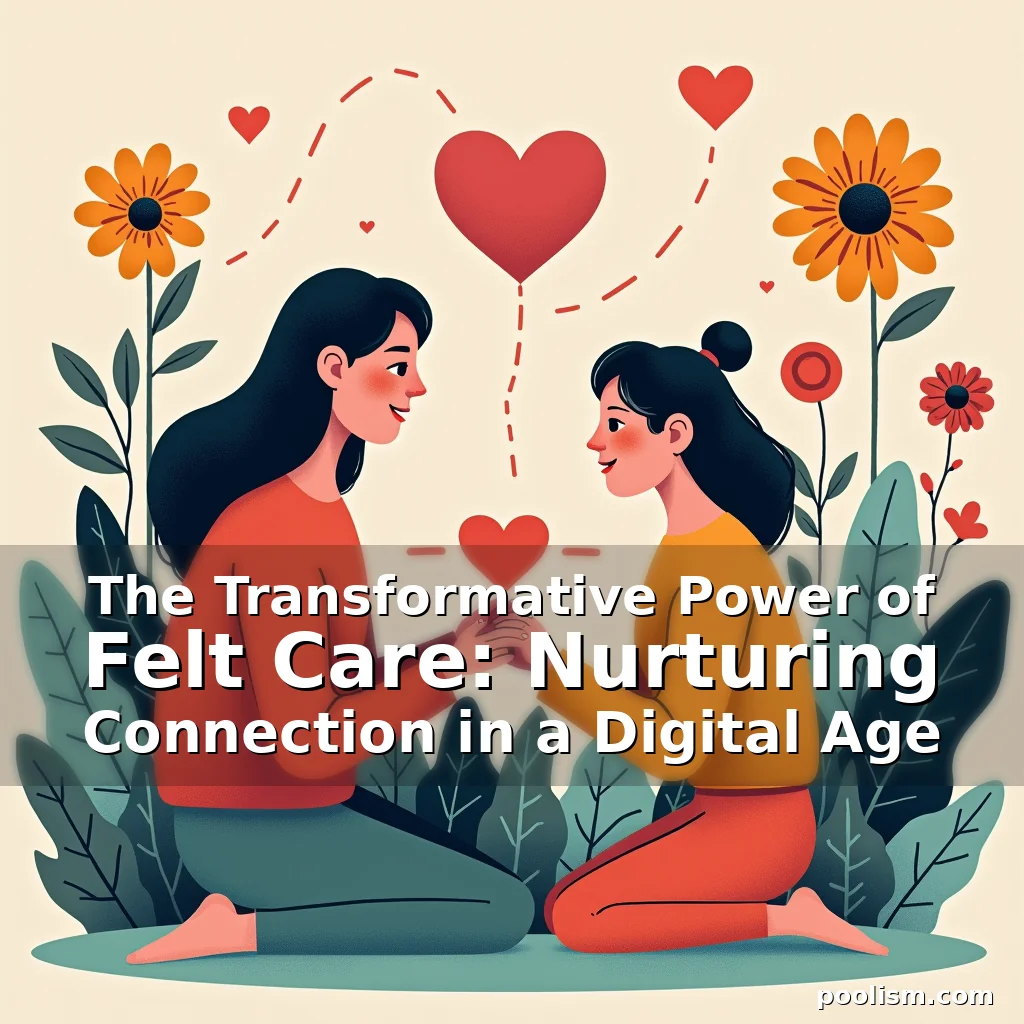
The Transformative Power of Felt Care: Nurturing Connection in a Digital Age
In an era dominated by screens and virtual interactions, the concept of felt care has emerged as a vital antidote to emotional detachment. This profound form of care goes beyond surface-level gestures, offering genuine connection rooted in empathy, presence, and intentionality.
Felt care is not merely about performing acts of kindness—it’s about creating meaningful experiences that resonate deeply within individuals. As communities like Poolism embrace this philosophy, we’re witnessing a cultural shift toward authentic human connections.
Understanding the Essence of Felt Care
At its core, felt care represents a conscious effort to understand others’ emotions without judgment. It requires us to listen actively, observe nonverbal cues, and respond with compassion rather than assumptions.
This approach transforms simple interactions into opportunities for deepening relationships. When someone truly feels seen and understood, it creates a foundation for trust and vulnerability.
Felt care operates at three distinct levels: cognitive understanding, emotional resonance, and behavioral response. These layers work together to create holistic support systems that address both immediate needs and long-term well-being.
The Science Behind Emotional Resonance
Neuroscience research reveals fascinating insights about how our brains process caring behaviors. Mirror neurons activate when we witness someone else experiencing emotion, enabling us to share their feelings physically.
Studies show that people who receive consistent felt care exhibit lower stress hormone levels and stronger immune responses. This biological evidence underscores the importance of nurturing emotional bonds.
A Harvard study found that social connection predicts longevity better than exercise or diet alone. This scientific validation reinforces why felt care must be prioritized in modern society.
Cultivating Felt Care in Daily Life
Intentional practice is essential for developing genuine caring abilities. Begin by setting aside time each day to engage fully with those around you—whether family members, colleagues, or strangers.
Create rituals that promote mindfulness during interactions. For example, make eye contact before speaking, pause before responding, and use open body language to convey receptiveness.
- Maintain active listening through focused attention and thoughtful questioning
- Show appreciation through personalized expressions of gratitude
- Offer help based on observed needs rather than assumed expectations
- Practice self-awareness to recognize your own emotional patterns
These small but deliberate actions can significantly enhance the quality of our interpersonal relationships over time.
Overcoming Barriers to Authentic Caring
Societal pressures often discourage vulnerable expression, making true felt care challenging. Learn to differentiate between performative kindness and genuine concern in various social contexts.
Modern communication technologies present unique challenges—text messages lack tone, emails miss facial expressions. Develop strategies to bridge these gaps in digital interactions.
Some common obstacles include fear of rejection, cultural differences in expressing affection, and personal trauma affecting emotional availability. Addressing these issues requires patience and self-compassion.
Implementing Felt Care in Community Settings
Communities like Poolism offer fertile ground for cultivating collective felt care practices. Organize group activities that encourage shared experiences and mutual support.
Create safe spaces where members feel comfortable sharing vulnerabilities. Establish guidelines that prioritize respect and confidentiality in all interactions.
Regular check-ins and feedback loops ensure that care initiatives remain effective and responsive to changing needs. Involve diverse perspectives in shaping community programs.
Navigating Cultural Nuances in Caring Practices
Different cultures express care in distinct ways, requiring sensitivity and adaptability. Research traditional customs related to hospitality, conflict resolution, and emotional expression.
Observe subtle cues such as physical touch boundaries, appropriate forms of address, and acceptable topics of conversation across different backgrounds.
Develop cross-cultural competence by seeking guidance from community leaders and participating in intercultural exchange programs. Embrace curiosity while maintaining respectful distance.
Measuring the Impact of Felt Care Initiatives
Evaluating the effectiveness of felt care efforts involves both qualitative and quantitative assessments. Collect participant testimonials alongside measurable outcomes like increased engagement rates.
Analyze changes in group dynamics using observational studies and surveys. Look for indicators such as improved collaboration, reduced conflicts, and enhanced overall satisfaction.
Establish baseline metrics before initiating any program, then track progress over time periods ranging from weeks to months depending on the initiative’s scope.
Building Sustainable Care Systems
Lasting change requires structured approaches to implementing felt care principles. Design systems that integrate caring behaviors into daily routines rather than treating them as occasional events.
Train facilitators to model empathetic behavior consistently. Provide resources and tools that enable ongoing development of caring skills within the community.
Encourage peer-to-peer mentoring to reinforce learning through practical application. Foster environments where mistakes are viewed as growth opportunities rather than failures.
Embracing Continuous Growth in Caring Relationships
Genuine felt care evolves through continuous learning and adaptation. Stay open to new perspectives that challenge existing assumptions about what constitutes meaningful connection.
Engage in reflective practices such as journaling or meditation to deepen self-understanding. Regularly assess how effectively you apply learned principles in real-world situations.
Seek out professional development opportunities focusing on emotional intelligence training and relationship-building techniques. Share knowledge freely to benefit the broader community.
Conclusion
Felt care represents more than just another trend—it signifies a fundamental shift towards valuing authentic human connection above transactional exchanges.
To cultivate deeper relationships in your life, begin today by practicing mindful presence in every interaction. Let your actions speak volumes about the sincerity of your care for others.
“`